Electric Kiln Maintenance Guide: Before, During, and After Firing
A well-maintained kiln fires more evenly, lasts years longer, and keeps your studio safer. Small issues left unchecked — a dirty thermocouple, glaze on an element, a cracked brick — …
Built to be held. Made to last.

A well-maintained kiln fires more evenly, lasts years longer, and keeps your studio safer. Small issues left unchecked — a dirty thermocouple, glaze on an element, a cracked brick — …
If you mix your own glazes, you’ve probably measured specific gravity before. But did you know you can use that number to calculate exactly how much dry material is suspended …
Introduction Ceramic test tiles are essential tools for potters and ceramic artists. They provide a way to test glazes, underglazes, oxides, and stains before applying them to final pieces. By …
Choosing the right mask is key to ensuring your safety while working with glazes. Below, we highlight the most common types of masks used in ceramic glaze making, listed from …
Converting a dipping glaze into a brushing glaze can make applying glazes to pottery much easier and more controlled. By adding CMC Gum to your glaze, you can achieve a …
How to Start Your Own Glaze Pantry: A Comprehensive Guide Are you tired of paying premium prices for pre-made glazes from stores? Making your own glazes can be a cost-effective …
Every raw material you use in a glaze recipe is a source of one or more oxides. Knowing which oxides each material supplies — and in what proportions — is …
Glaze chemistry is written in the language of oxides. Every material you weigh out — feldspar, whiting, silica, zinc oxide — is a source of one or more oxides that …
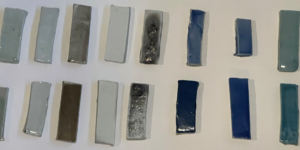
Introduction If you’re a ceramic artist looking to experiment with glaze colors, it’s essential to have a solid testing process in place. This guide walks you through the steps to …
Normalizing a glaze recipe means converting the raw material weights into a standardized format — the Unity Molecular Formula (UMF) — that lets you compare, analyze, and modify glazes based …