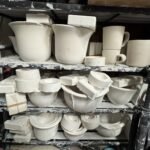
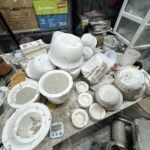
Slipcasting is the process of pouring liquid clay into plaster molds to create repeated ceramic forms. It’s used extensively in production pottery, industrial ceramics, and studio practice — and it’s one of the most rewarding techniques to master. The guides below cover everything from understanding the basics to mixing casting slip, making your own molds, and troubleshooting common problems.
Understanding Slipcasting
- What is Slipcasting? — a complete introduction to the process
- The Beauty of Slipcasting: Step-by-Step Guide — the full process from start to finish
- What is Deflocculation and Flocculation? — the chemistry behind casting slip
- What is Specific Gravity and How to Measure It — essential for consistent slip
Casting Slip Recipes
- How to Make Casting Slip — step-by-step guide with recipes including Reeves and highfire porcelain
- Midrange Casting Slip — cone 6 recipe
- Common Ceramic Slip Questions Answered
Making Molds
- Plaster Calculator and Mixing Guide — getting your water-to-plaster ratio right every time
- How to Mix Plaster for Mold Making — step-by-step guide for ceramic artists
- How to Make Cottle Boards — containment walls for pouring molds
- Making One Piece Pottery Molds — the simplest mold type
- Making 2 or Multipart Molds — for more complex forms
- How to Make a Plaster Drying Board — for drying and reclaiming wet clay
Decorating Slipcast Work
- Slip Decoration Techniques — overview of all slip decoration methods
- Ceramic Slip Recipes — decorating slips from low to high fire
- How to Make Decorating Slip
- Ceramic Bakeware Care Guide — for functional slipcast pieces
Shop B2W Ceramics
Browse slipcast pieces from the studio — including our Slipcast Small Mug and Slipcast Large Mug in the B2W Ceramics shop.